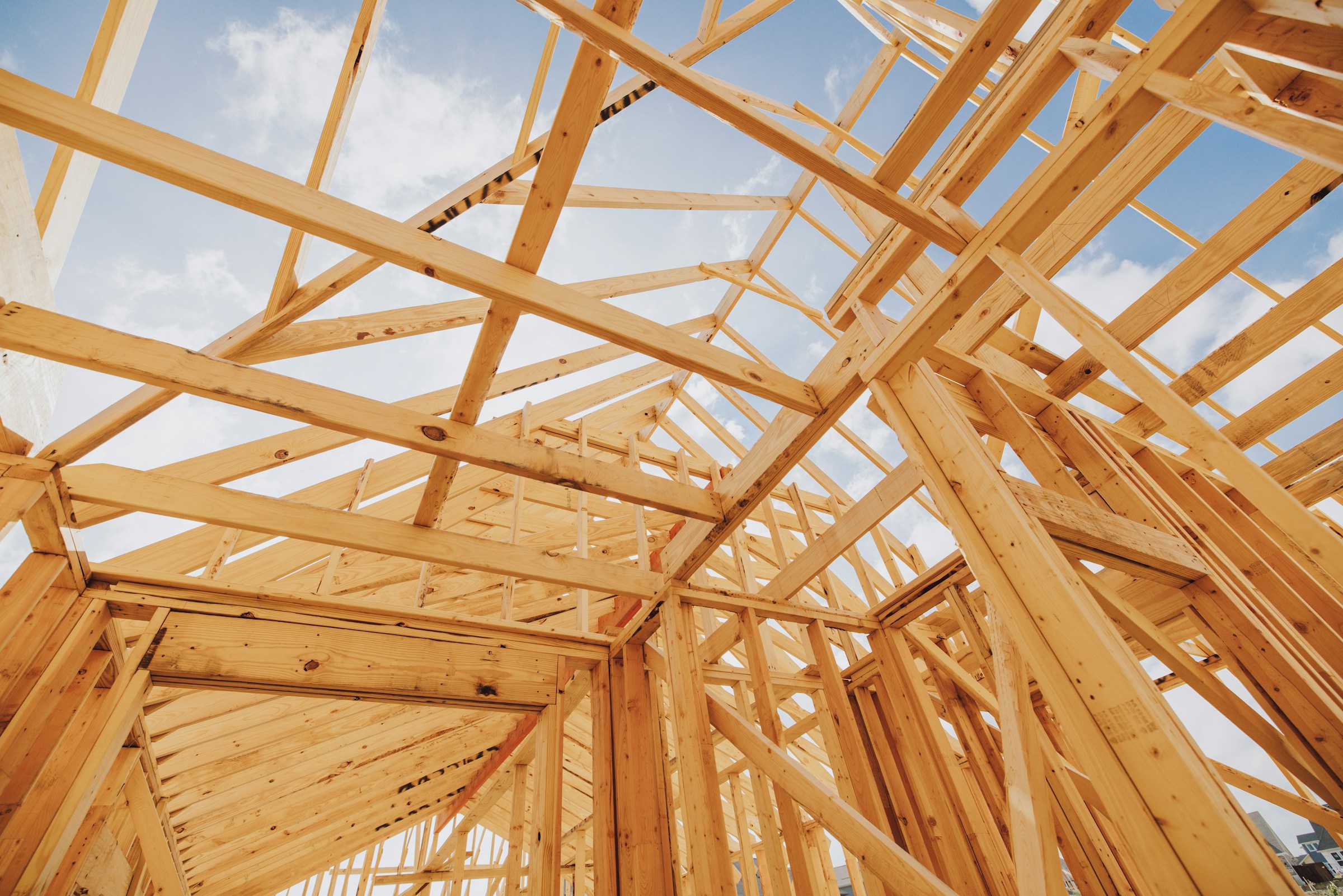
Timber as a material
Wood is the only major structural building material that is renewable. Trees absorb carbon as they grow, and engineered timber products lock that carbon into the structure of a building for its lifespan. This is materially different from concrete and steel, both of which are carbon-intensive to produce.
Kiln-drying and precision engineering also reduce material waste significantly. Components are cut to exact dimensions before delivery, which means less off-cut waste on site compared to traditional in-situ construction methods.
Energy efficiency in the homes we build
Timber-frame construction is naturally well-suited to high levels of thermal insulation. The structural system allows for thick, continuous insulation layers without the thermal bridges common in masonry walls. Homes built this way are easier to make highly energy efficient — lower heating demands, better comfort, and lower running costs for residents over the long term.
We design our projects to meet or exceed current Austrian energy standards, and we specify insulation, airtightness, and glazing with long-term performance in mind — not just minimum compliance.
Construction impact
Factory production means less site disruption. There is less heavy plant on site for extended periods, less material delivery traffic, and a shorter overall construction period — all of which reduce the impact on the surrounding area. Timber construction also generates less construction waste than wet trades, and much of what is generated is recoverable.
We won't claim our projects are zero-impact — no construction is. But the methods we use are among the lower-impact options available for residential development, and we choose them partly for that reason.
Looking ahead
As the company grows, we intend to track and report the embodied carbon of our projects and to continue specifying materials with a longer-term view. We see this not as a compliance obligation but as a sensible way to build — for the residents who live in our homes, for the investors and landowners who partner with us, and for the communities where we develop.